Hot weather and blood sugar: what a UK heatwave did to mine
By Leon Wilkinson, Type 3c patient and developer of GlycoTrace · June 2026
I write this as someone living with Type 3c diabetes, not as a medical professional. It is my own experience alongside the published guidance I lean on, sourced at the end, not medical advice.
Quick answer
Heat genuinely moves blood sugar around. During a long, unusual UK heatwave my own numbers turned messy: stubborn highs that my insulin barely touched, sudden drops into the low 4s, a snack that spiked me when it normally would not, and a string of small things I had not connected to the weather. My appetite fell away, my sleep broke up, I stopped exercising, and I started keeping my insulin cool. None of this is medical advice. It is one person's data and what I noticed. If your numbers go strange in the heat, watch the patterns, lean on your own data, and get a review if you can.
This article is part of our complete guide to Type 3c diabetes, which covers what it is, its causes, diagnosis and day-to-day management.
The week my blood sugar stopped following the rules
The UK does not usually get heat like this for long. A hot day, sure, then it breaks. This time it sat on us for a prolonged stretch, and somewhere in the middle of it my blood sugar stopped behaving the way I expect.
For context, I live with Type 3c diabetes, I take insulin, and I wear a FreeStyle Libre, so I get to watch the whole thing play out as a line on a screen rather than a few finger pricks. That line is normally fairly readable. During the heatwave it was not. The same routine that usually keeps me steady produced highs I could not shift and lows that arrived out of nowhere.
Here is what I saw, straight from my own sensor, and the things I think were behind it.
Spikes that climbed, then crashes I did not expect
The clearest theme was volatility. Not just high, not just low, but big swings between the two in a way I am not used to.
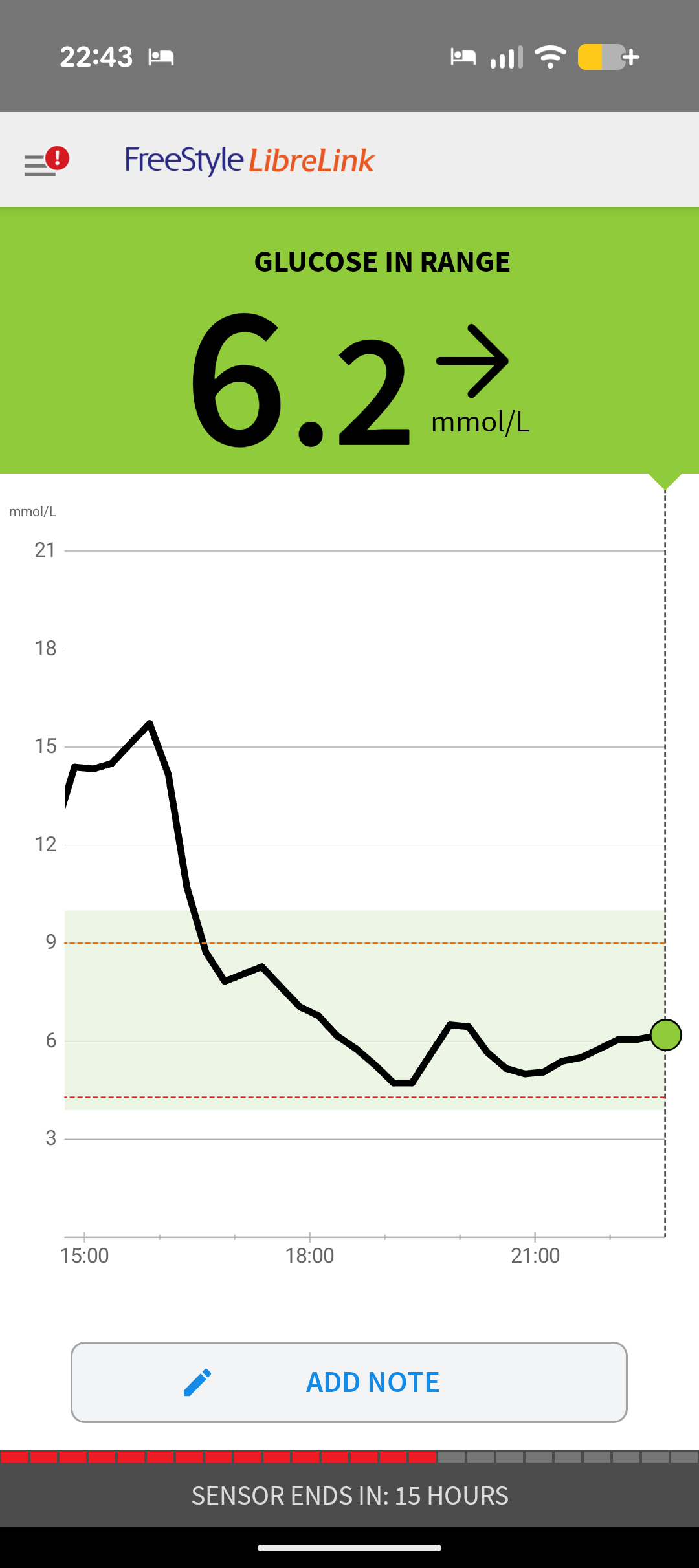
That afternoon I went up near 15.7, which is high for me, and then instead of easing back gently it fell off a cliff down towards 4.7 and kept twitching around for the rest of the evening. A day like that is tiring in a way the numbers do not quite capture.
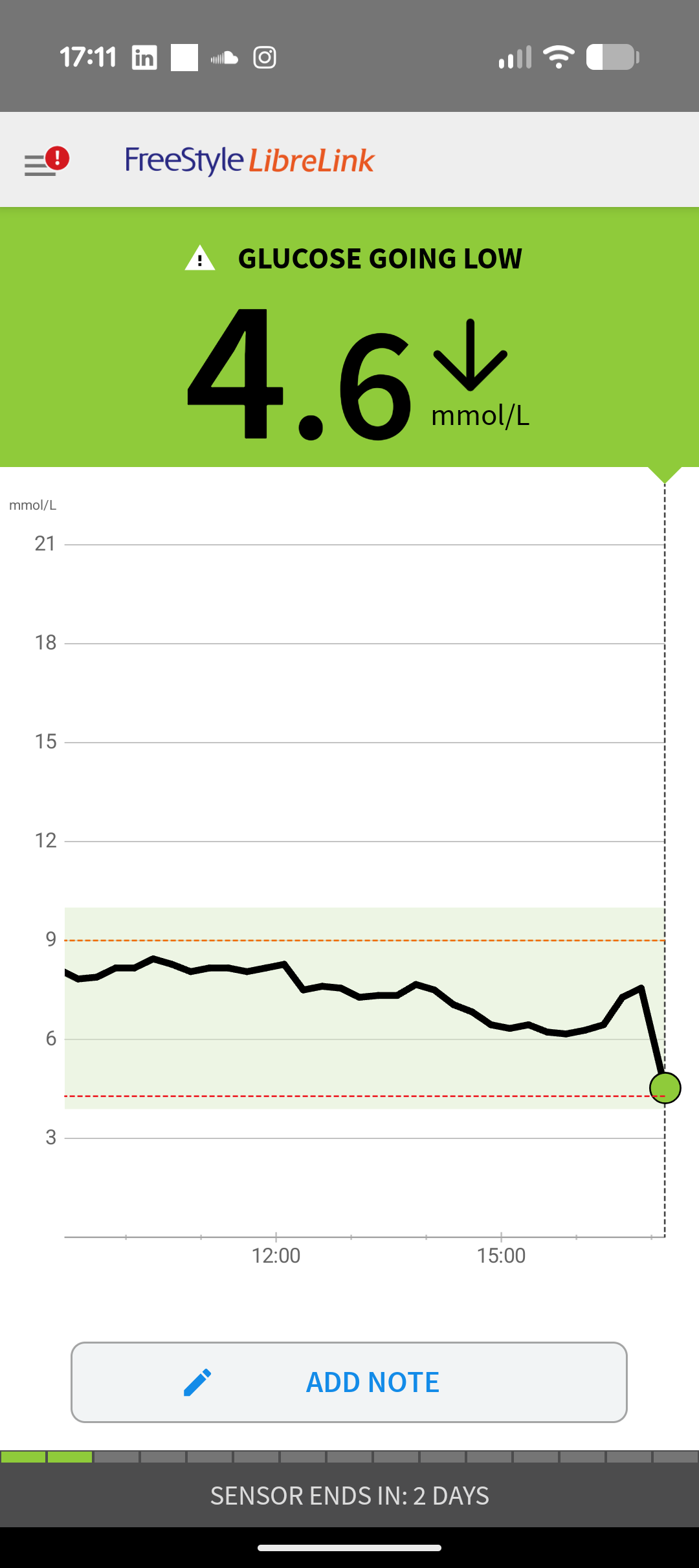
The lows were the part that put me on edge. They did not announce themselves. The graph would look settled and then drop, like the one above heading to 4.6 and still falling. Heat can pull glucose down through faster insulin absorption from warm skin and through the changes in eating and moving that come with it. Whatever the exact mechanism, the practical effect for me was more trips low, so I started checking more often.
On the lows: in hot weather they can come on fast. Read your low readings first and treat them promptly. If they are stacking up or coming without warning, do not just sit with it: a GP, a diabetes specialist nurse or the Diabetes UK helpline can all help, and it is fair to ask for a review even if you have not been seen in a while. A severe low is a 999 situation. Do not wait for a pattern to become a problem.
Stubborn highs that the insulin barely touched
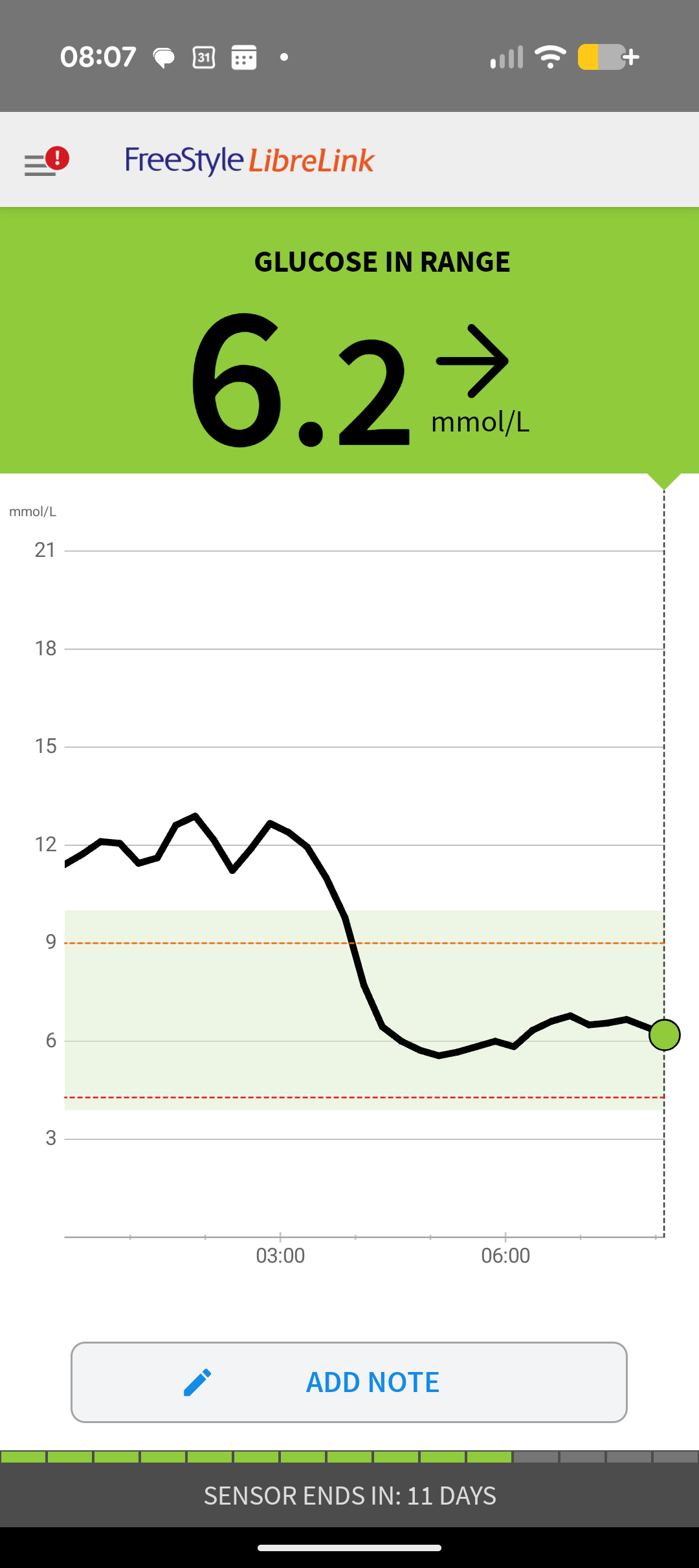
The flip side of the lows was how sticky the highs became. The trace above shows me sitting up around 12 to 13 for hours overnight, holding there in a way that normally would have come down sooner. It felt like the insulin was working at half strength.
There are two things worth separating here. One is whether the heat changes how insulin behaves in the body. The other, which I had not taken seriously enough, is whether the insulin itself had been getting too warm. More on that below.
The rice cake that should not have spiked me
One moment summed the week up. I had a couple of rice cakes, which for me are normally a fairly quiet snack, and my glucose took off. That part I can almost live with. What threw me was that the insulin did not seem to bring it back down the way it usually does. The correction just did not land.
In my experience that combination, an unexpected spike plus a correction that does not work, is a strong hint that something other than the food is off. In a heatwave my first two suspects are how the heat is affecting absorption and whether my insulin has been kept cool enough.
Heat and insulin: why I started keeping mine cool
Insulin does not like heat. It is a protein, and if it gets too warm it can lose potency, which means the same dose does less. In normal British weather you can be a bit casual about this and get away with it. In a sustained heatwave you cannot.
So I bought a small insulated wallet to keep my insulin cool when it is hot, both at home and when I am out. Mine holds a refreezable gel pack and has a little thermometer built into the lid, which turns "is this cool enough?" from a guess into a number I can actually read. It is a cheap fix and it took one suspect off the list.
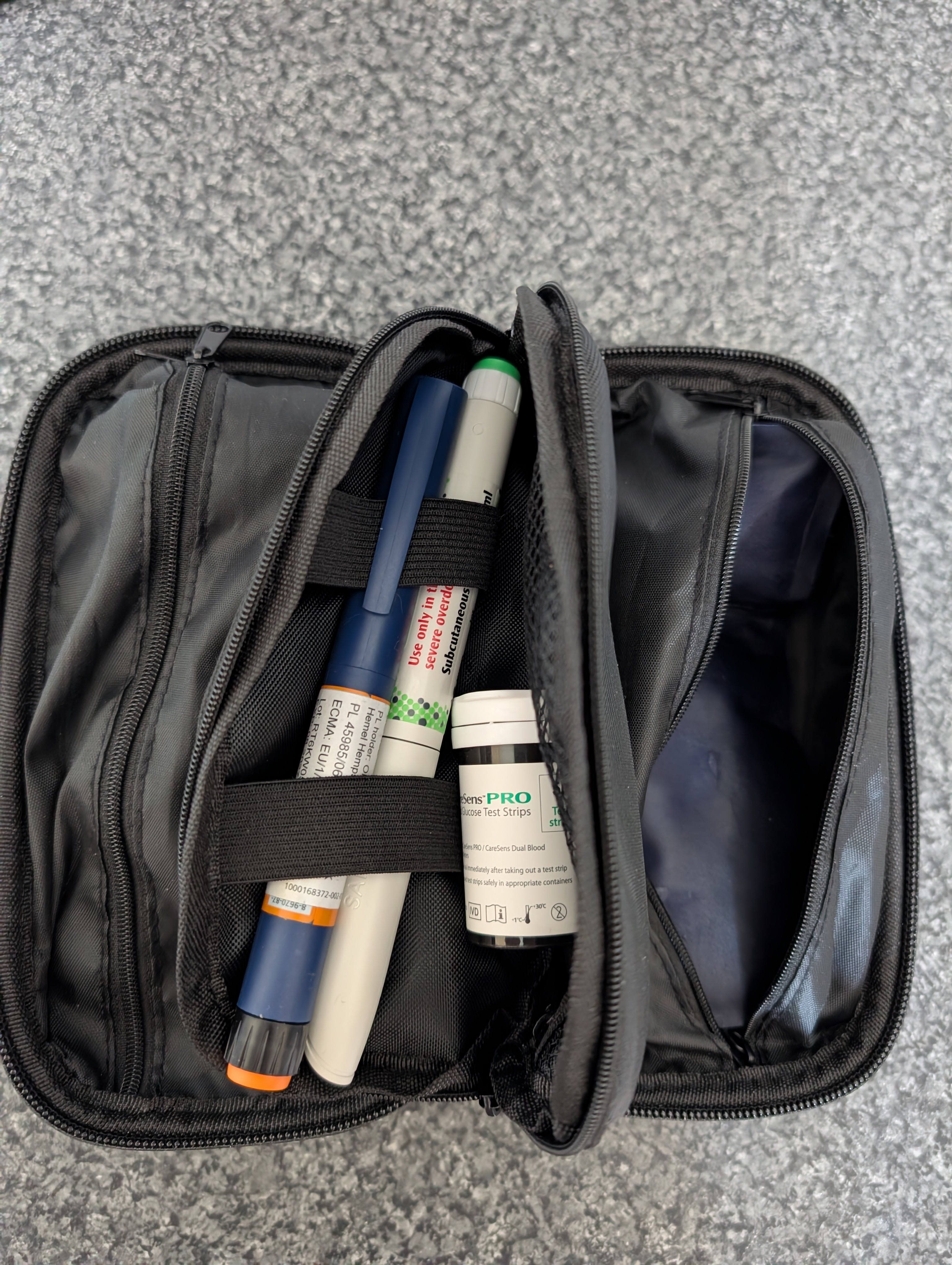
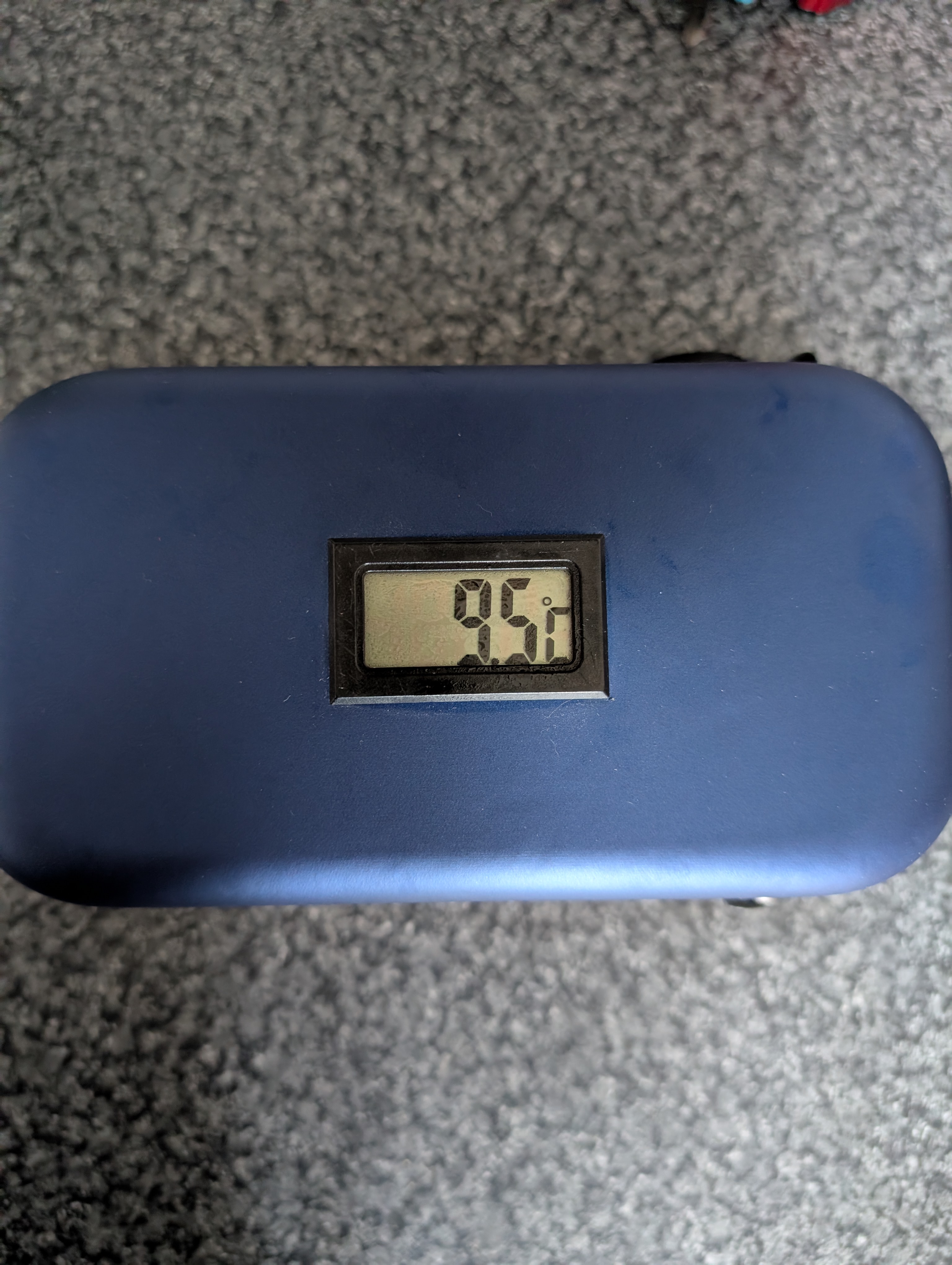
One honest note on that reading: a wallet like this keeps insulin cool, not refrigerated. Around 9°C is fine for the cartridge you are actively using, which is generally rated for storage at room temperature, commonly below 25 or below 30°C depending on the brand, for around 28 days; but it is not the 2 to 8°C fridge range meant for spare, unopened supplies. Both the temperature limit and the number of days differ between insulins, so the leaflet for yours is the one to trust. If your insulin has been sitting somewhere warm, a car, a windowsill, a bag in the sun, it is worth considering whether that is part of the story.
The exercise I did not realise I leaned on
Here is the one that genuinely surprised me. In the heat I stopped exercising. It was too hot to want to move, so I did not. And my numbers ran higher and felt harder to manage across the board.
I knew exercise helped, in the abstract. I did not appreciate how much of my day-to-day steadiness was quietly being done by movement until I removed it. Activity tends to improve how the body responds to insulin and helps bring glucose down, and taking that lever away in the middle of a heatwave, while everything else was already unsettled, was clearly part of the picture for me.
Eating less, sleeping worse
Two more things shifted at the same time, and they matter because diabetes does not happen in isolation.
My appetite fell away. In the heat I just did not feel like eating much, so my diet changed without me really deciding it to. Eating less, and eating differently, changes the whole shape of a day's glucose, and it interacts with insulin that is timed around meals you might now be skipping or shrinking.
My sleep broke up. Hot nights meant lighter sleep and waking early. Poor and broken sleep can affect glucose regulation, and a tired version of me is also a less attentive version of me, slower to notice a drift or a low. Add that to everything else and the messy graphs start to make sense.
What heat actually does to diabetes: the evidence (US and UK)
That is my week. Here is what the health bodies say is going on, and it lines up. The advice is broadly the same on both sides of the Atlantic. The US Centers for Disease Control and Prevention (CDC) and the UK's Diabetes UK and NHS give very similar core guidance, with a few local differences.
Heat changes how insulin behaves in you. Both highs and lows are on the table. The CDC says high temperatures can change how your body uses insulin, so you may need to check more often and adjust. Diabetes UK is more specific about two competing effects: sitting in the sun and being less active can push blood sugar up, while insulin can be absorbed more quickly from the injection site in warm weather, which increases the risk of hypos. That swing between the two is exactly what my traces showed.
Heat damages the insulin itself. Insulin is a protein and heat breaks it down. General guidance is to keep spare insulin refrigerated at 2 to 8°C (36 to 46°F), and once it is in use to keep it at room temperature below about 25 to 30°C (77 to 86°F), where many insulins last around 28 days, though some are rated for longer, so check your own leaflet. Above roughly 30°C the protein starts to degrade, and something like a hot car can ruin it within hours. Heat damage is not always visible, which is why Diabetes UK suggests keeping insulin in the fridge in hot weather and carrying what you need in a cool bag or pouch, never leaving it in a car or in direct sun. A cool pouch is cheap insurance.
Dehydration matters more than it sounds. Heat raises the risk of dehydration, and dehydration concentrates blood glucose. The CDC advises drinking water even when you are not thirsty and going easy on alcohol and caffeine, which cause water loss and can push blood sugar up. Diabetes UK warns that severe dehydration raises the risk of two dangerous states: hyperosmolar hyperglycaemic state (HHS) and diabetic ketoacidosis (DKA). Water first, before anything clever.
And the knock-on effects stack up.
- Less movement in the heat tends to push glucose up (Diabetes UK).
- Changed appetite and eating reshape the whole day's pattern, and your meal-timed insulin with it.
- Broken sleep from hot nights can affect glucose regulation and leaves you slower to notice a drift.
- Sunburn can raise blood sugar (CDC), so sun cream is part of diabetes care too.
- Your kit feels it. Diabetes UK advises keeping your meter and test strips near room temperature and out of direct sun, but not in the fridge, as cold can mislead too.
- Heat exhaustion can mask a hypo. Feeling dizzy, sweaty and weak fits both, so do not assume it is just the heat. Check.
| Topic | US (CDC) | UK (Diabetes UK / NHS) |
|---|---|---|
| Insulin storage | Refrigerate; never in direct sun or a hot car | Keep in the fridge; carry in a cool bag or pouch; not in the car or sun |
| Effect on blood sugar | Heat can change how your body uses insulin; test more and adjust | Highs from inactivity; faster insulin absorption raises hypo risk; check more often |
| Dehydration | Drink water; ease off alcohol and caffeine; mind diuretics | Drink plenty; severe dehydration risks HHS and DKA |
| When to take extra care | Around 80°F (27°C) in the shade with 40% humidity and above | During heatwaves and heat-health alerts |
| Meter and strips | Keep medicines and supplies out of sun and heat | Keep at room temperature, out of sun, and not refrigerated |
One difference is worth naming. US summers are hotter and longer and air conditioning is the norm, so the advice leans on staying cool indoors. UK homes and bodies are less adapted to heat, and air conditioning is rare, so a prolonged heatwave like this one can be disproportionately disruptive even at temperatures a hotter country would shrug off. The biology is the same. The preparation is what differs.
Foods and drinks to watch in the heat
Hydration is not only about how much you drink, it is about what. A few things quietly work against you when it is hot.
- Alcohol. It dehydrates you and can cause delayed lows hours later, which is a poor combination on a hot day. The CDC flags it specifically.
- Caffeine. Coffee, energy drinks and some colas cause water loss. The CDC lists caffeine alongside alcohol as something to ease off on in the heat.
- Sugary drinks. Regular soft drinks and sports drinks spike blood sugar and do not hydrate you well. Keep the fast-acting sugar for treating an actual low, not for thirst.
What to reach for instead is simple: water first, and sugar-free drinks if you want some flavour, which is Diabetes UK's advice. Keep hydration and hypo treatment separate in your head, because they are two different jobs.
Keep the fluids simple. The solid reason to stay on top of water in the heat is the one already covered above: dehydration pushes blood glucose up and, taken far enough, raises the risk of HHS and DKA. That is reason enough on its own, without reaching for any cleverer justification. In a week when my appetite and routine were all over the place, "water first" was one of the few simple rules that still held.
About the advice to "just ask your team"
There is a myth that everyone with diabetes has a specialist on speed dial. I do not. I last saw my diabetes consultant over a year ago, and plenty of people I know are in the same boat, seen rarely and running the day to day themselves. The constant "check with your team" you see on every page can feel a bit unreal, and I suspect some of it is borrowed from healthcare systems that work differently to ours.
So in practice I lean on my own data, and this is where the app earns its place. Looking back through it, I could see that my steadiest stretches lined up with a particular basal level, around 16 units for me. When the heat pushed me high and the corrections stopped landing, I made an educated call from that pattern and increased my basal. For me, it worked, and things settled.
I am not telling you to do that. A basal change is the part that can bite: if you get it wrong the risk is lows, and you have seen above how fast mine arrived this week. The point is that the decision came from data rather than a guess. If you are managing largely on your own, your own numbers are the most honest adviser you have, and the more context you log around them the better those decisions get. And if you are unsure, or the lows are mounting, a GP, a diabetes specialist nurse or the Diabetes UK helpline can all help, and you can ask for a review even after a long gap.
What I am taking from it
None of this is advice on what you should do, and none of it is a reason to change doses on your own. It is what the heatwave taught me about my own data:
- Heat is a variable, so log it. When I noted the weather, sleep, food and activity alongside the readings, the chaotic graphs turned into something I could actually explain.
- Keep the insulin cool. A cheap cool pouch removed one whole suspect. Worth it.
- Read the lows first. The drops were the risky part, not the highs. I checked more often and treated promptly.
- Notice what you normally rely on. For me that was exercise. Losing it quietly mattered more than I expected.
- Take the patterns to your team, not the panic. A strange week in extreme weather is information to share, not a problem to solve alone.
If anything, the heatwave was a useful reminder that blood sugar is not just about food and insulin. It is about heat, sleep, movement, appetite and how they all stack up. Seeing it laid out on the Libre is what made that obvious.
See what is really moving your blood sugar
GlycoTrace brings your Libre readings together with meal, insulin, sleep and activity logs, so a strange week, like a heatwave, becomes a pattern you can understand. Free on Android.
Common questions
Does hot weather affect blood sugar? +
Yes, heat can affect blood glucose in several ways: warm skin changing how quickly insulin is absorbed, dehydration shifting readings, and the knock-on effects on sleep, appetite and activity. The effect is individual, so watch your own data and discuss any pattern with your diabetes team rather than assume a single cause.
Can heat damage insulin? +
Insulin is temperature sensitive and can lose potency if it gets too warm. Manufacturers give specific storage ranges for in-use and spare insulin. In hot weather many people use a cool pouch or fridge for spares. Check your own insulin's storage instructions and your team's advice for the exact temperatures.
Why do I go low more often in hot weather? +
Several heat-related factors can push glucose down, including faster insulin absorption from warm skin and changes in eating and activity. Lows can come on quickly, so it is worth checking more often and treating them promptly. If you are getting frequent or unexplained lows, contact your diabetes team, particularly if your warning signs are reduced.
Should I change my insulin doses during a heatwave? +
Carefully, and from your own data if you change anything at all. Not everyone has a specialist on call, and many people manage the day to day themselves. If you do adjust something in the heat, base it on your own patterns rather than guesswork, change one thing at a time, and watch closely, because the real risk of a basal change is lows. If you are unsure or the lows are mounting, a GP, a diabetes specialist nurse or the Diabetes UK helpline can help, and you can ask for a review.
Sources and further reading
The factual points in this article are drawn from the sources below. Personal observations are my own Libre data. Storage temperatures are general; confirm the exact figures for your own insulin against its leaflet.
- CDC – Managing Diabetes in the Heat: cdc.gov
- CDC – Heat and Medications guidance: cdc.gov
- Diabetes UK – Diabetes and hot weather: diabetes.org.uk
- FDA – Insulin storage and switching in an emergency (temperature ranges): fda.gov
- NHS – living with diabetes, hypoglycaemia and keeping medicines safe in the heat: nhs.uk
- Your insulin's manufacturer – the patient information leaflet for exact in-use and unopened storage temperatures (Novo Nordisk, Lilly, Sanofi, and others).
Guidance is updated periodically. Confirm any figure is current and correctly attributed before relying on it. Re-check the live source pages before publication.
Related reading
- Time in Range explained: how to read your CGM without panicking
- Why is my blood sugar unpredictable after pancreatitis?
- CGM for Type 3c diabetes: what the research actually says
Spot your own patterns, heat and all
Combine Libre readings with meal, insulin, sleep and activity logs and see what is really moving your blood sugar. Free on Android, built for Type 3c.
Download GlycoTrace free